Blog navigation
Latest posts

Latest posts

  • Cryogenic Seals for LNG and Industrial Gas Systems
    Cryogenic Seals for LNG and Industrial Gas Systems
    3399 Views

    Cryogenic seals work in a very harsh corner of engineering. Temperature is far below zero. Media can be LNG, liquid nitrogen, oxygen, or hydrogen. If the seal fails, the system may leak, freeze, or even form dangerous ice plugs. As a specialized cryogenic seal manufacturer, we design seals that stay tight from cool-down to warm-up. This article gives an engineer-level view of how these seals work and how to specify them for real projects. 1.What Makes Cryogenic Seals Different? Most standard...

    Read more
  • Spring Energized Seal
    Spring Energized Seal
    3392 Views

    Industry: Automotive Application: Actuator and valve modules for electrified transmissions; Fuel Cell Regulator Valves for Hydrogen applications Media: Air, Hydrogen, Fuel, Oil

    Read more
  • Agilent HPLC Seal Replacement Guide: Compatible, Cost-Effective Alternatives
    Agilent HPLC Seal Replacement Guide: Compatible, Cost-Effective Alternatives
    3294 Views

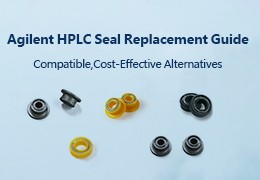
    High-performance liquid chromatography (HPLC) systems, like those from Agilent, rely on precision seals to maintain fluid integrity and analytical accuracy. Over time, these seals degrade, increasing the risk of leaks, pressure instability, or sample contamination. Replacing worn components with compatible, cost-effective alternatives can save your lab money—without sacrificing performance.       In this guide, we explore the most common Agilent HPLC seal models, provide high-quality...

    Read more
  • Mining Industry Hydraulic Seals and Bearings – Engineered for Extreme Conditions
    Mining Industry Hydraulic Seals and Bearings – Engineered for Extreme Conditions
    3262 Views

    Explore our durable mining seals, hydraulic seals for mining, and mining equipment bearings—engineered to withstand harsh underground conditions and match top brands like Hallite.

    Read more
  • Why Seal Failures Are the Hidden Reason Your Edge Banding Machine Keeps Breaking Down
    Why Seal Failures Are the Hidden Reason Your Edge Banding Machine Keeps Breaking Down
    3241 Views

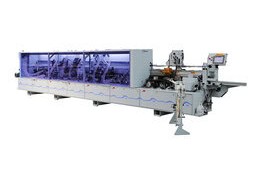
    From leaking glue pots to inaccurate trimming, minor sealing issues can cause major production headaches. Discover how to detect, prevent, and solve seal-related failures in edge banding machines—and how to extend your equipment’s lifetime by 2x with the right sealing technology.

    Read more
  • Top LNG Dispenser Seal Manufacturers (2025)
    Top LNG Dispenser Seal Manufacturers (2025)
    3182 Views

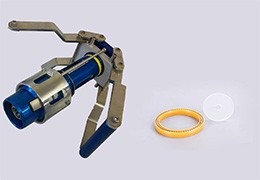
    Here's the list of Top LNG Dispenser Seal Manufacturers Worldwide in 2025, specifically for LNG fueling nozzles (used at LNG refueling stations):

    Read more
  • What is PTFE and PTFE products?
    What is PTFE and PTFE products?
    3159 Views

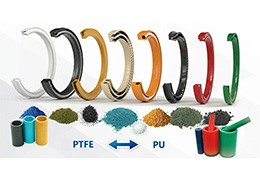
    PTFE is the abbreviation of Polytetrafluoroethylene, also named is Teflon. PTFE is found in many industrial products. This includes gaskets, bearings, and parts for valves, pumps, and hydraulic cylinders.

    Read more
  • What is S seal?
    What is S seal?
    3079 Views

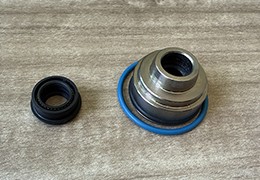
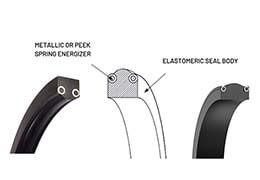
    S-Seals are spring-energized one-piece elastomeric seals, essentially a single-component anti-extrusion seal. It has an “S”-shaped rubber cross-section with a built-in coiled metal spring (garter spring) embedded in the elastomer. This integrated spring constantly pushes the sealing lip against the gland, boosting sealing force and preventing extrusion at high pressure. S-Seals replaces a traditional O-ring + backup-ring or 3-piece T-seal assembly with one part. Key benefits include...

    Read more
  • Critical FFKM Parameters: A Semiconductor Engineer’s Guide to Seal Longevity
    Critical FFKM Parameters: A Semiconductor Engineer’s Guide to Seal Longevity
    2892 Views

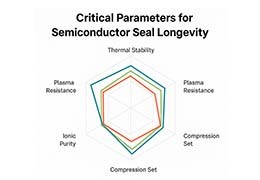
    When selecting FFKM O-rings for semiconductor equipment, it’s not enough to rely on brand names or generic claims like “high purity” or “plasma resistant.” For engineers responsible for etch and deposition tools, quantifiable parameters are the key to ensuring seal longevity and process stability. This guide breaks down the 4 most critical parameters for FFKM material selection, based on material science, real-world data, and semiconductor industry best practices. Parameter 1: Thermal...

    Read more
  • Waters HPLC Seals: Compatible Replacement Parts & Cost-Saving Alternatives
    Waters HPLC Seals: Compatible Replacement Parts & Cost-Saving Alternatives
    2827 Views

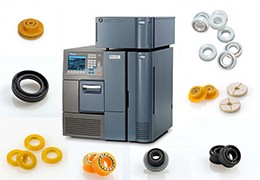
    High-performance liquid chromatography (HPLC) systems from Waters®—including Alliance®, ACQUITY® UPLC, and classic 2690/2695 series—rely on precision seals to ensure reliable performance. Over time, pump seals, injector seals, and wash seals wear down, causing leaks, unstable pressure, and costly downtime. Switching to compatible Waters HPLC seals gives labs a cost-effective solution. These aftermarket Waters seals are engineered with high-quality materials like UHMWPE, PTFE, and stainless...

    Read more
  • Precision Replacement Parts for VERMES Microdispensing Systems
    Precision Replacement Parts for VERMES Microdispensing Systems
    2801 Views

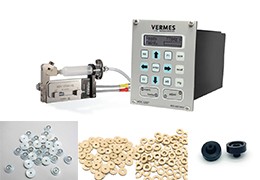
    VERMES Microdispensing is a global leader in high-precision jet dispensing technology, widely used in semiconductors, microelectronics, automotive, and medical manufacturing. These systems demand uncompromising accuracy and durability, which means even minor component wear—such as seals and valves—can disrupt production or cause costly downtime. At XHH Seals, we provide precision-engineered replacement parts compatible with VERMES Microdispensing Systems. Our sealing rings, O-rings, and wear...

    Read more
  • Comprehensive Guide to Rubber Materials and Their Applications
    Comprehensive Guide to Rubber Materials and Their Applications
    2798 Views

    In the world of industrial sealing technology, the choice of rubber material determines the performance, durability, and reliability of the final seal. From automotive engines to semiconductor vacuum chambers, each application requires a specific balance of chemical resistance, temperature capability, elasticity, and cost efficiency. This comprehensive guide introduces the 16 most common rubber materials used in sealing applications — detailing their core properties, temperature ranges, and...

    Read more
Showing 25 to 36 of 80 (7 Pages)